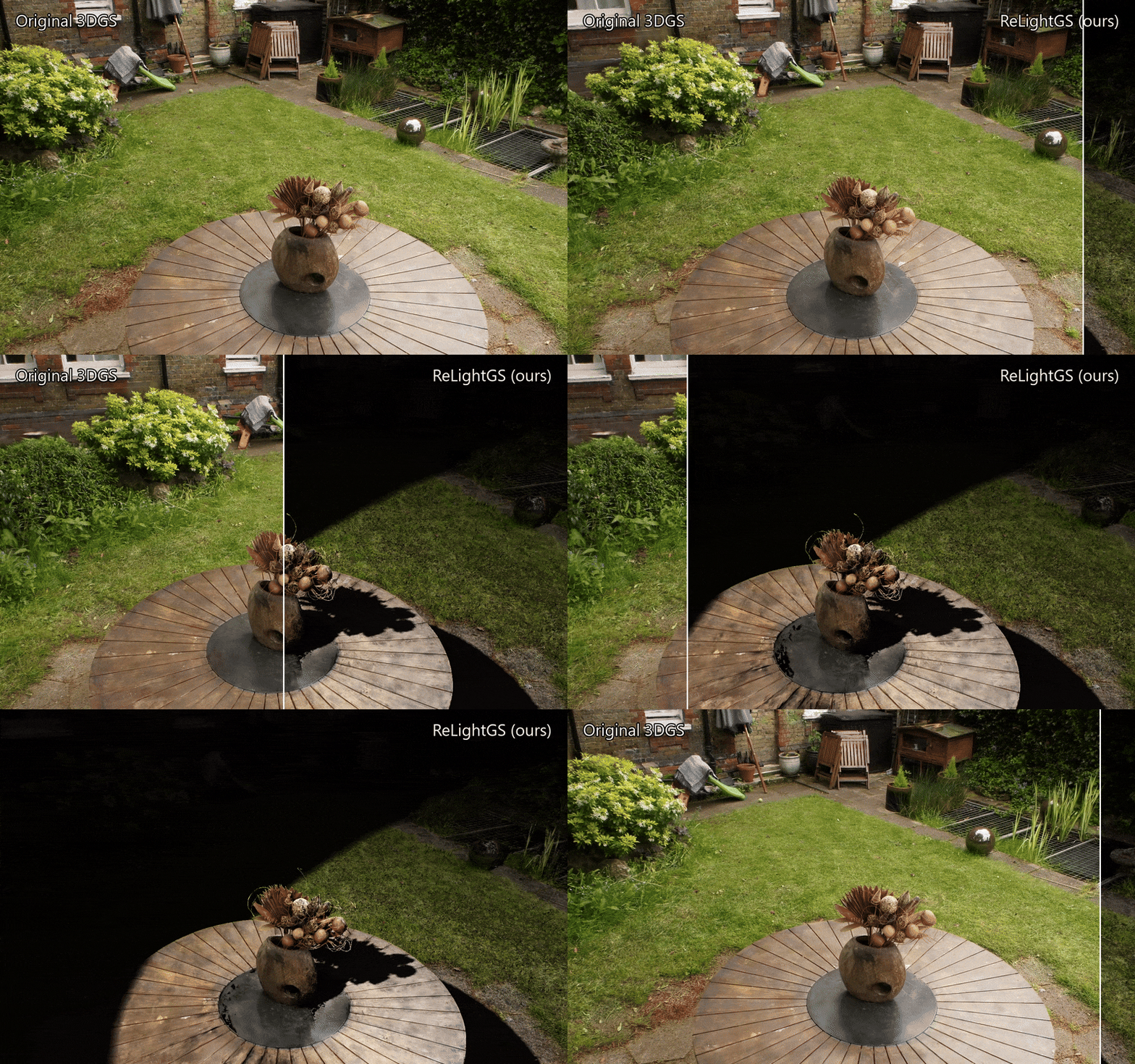
3D Gaussian Splatting (3DGS) enables high-quality real-time novel-view synthesis, but standard trained Gaussian scenes provide little control over illumination. Their learned appearance entangles lighting, material appearance, and view-dependent effects, making existing assets difficult to relight without the original training images or additional optimization.
We propose ReLightGS, a deferred relighting pipeline for already trained 3DGS scenes that operates directly on fixed exported Gaussian models. The method constructs a Gaussian G-buffer, reconstructs approximate depth and normals, assigns PBR material parameters from lifted material labels, and computes illumination with approximate visibility and occlusion. We evaluate on pretrained vanilla 3DGS scenes from the TensoIR Synthetic dataset under multiple HDR environment maps and compare against inverse-rendering baselines. Results show that plausible relighting is possible without retraining, although baked illumination and approximate geometry remain limitations.
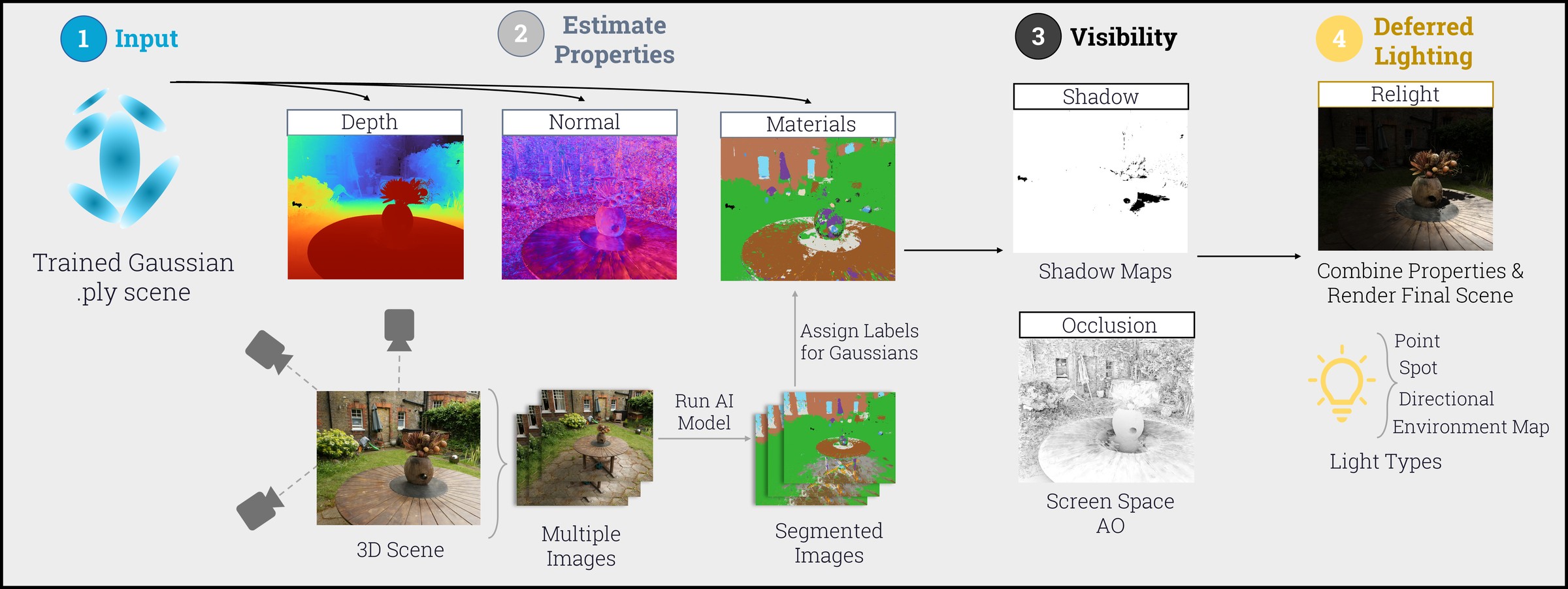
Relightable methods usually require the original multi-view images and additional optimization. That is impractical when only a pre-trained asset is available, or when a user simply wants to edit the lighting without waiting for a retraining run. This motivates our central question:
Can new light sources be inserted into an already trained 3D Gaussian Splatting scene,
represented as an exported .ply model, to produce plausible illumination
changes, shadow casting, and appearance modification without retraining the model?
.ply, (2) estimate depth, normals, and
materials, (3) approximate visibility via shadow maps and screen-space AO, and (4) a deferred
lighting pass that combines all cues with inserted point, spot, directional, and environment lights.
ReLightGS is implemented in Vulkan by extending the 3DGS.cpp renderer, and runs interactively on a laptop NVIDIA RTX 3060.
A 3DGS scene is a soft volumetric density, not an explicit surface, so the exported
.ply has no per-pixel depth or normals. For depth we compare three estimates:
We use iso-opacity depth because it produces sharper surfaces and reduces floating artifacts.


Normals are estimated from the depth buffer or the Gaussian geometry, comparing four estimators:
We use max-density plane normals because they are more coherent and less affected by depth-buffer noise, making them more stable.


We use Dense Material Segmentation (DMS) [Upchurch 2022], an AI-based material-segmentation model, to predict 2D material labels from rendered views (auxiliary views on a hemisphere around the scene: three elevations and eight azimuths, plus a top-down view). These labels are assigned to individual Gaussians using the Gaussian-ID buffer, then mapped to approximate Physically Based Rendering (PBR) parameters: diffuse, specular, roughness, and metallic.


Direct-light visibility is approximated with shadow-depth maps, and local indirect attenuation with screen-space ambient occlusion (SSAO) [Mittring 2007] computed from the reconstructed depth and normal buffers.


The final pass combines all estimated cues from the Gaussian G-buffer: depth, normals, colour, materials, shadows, and ambient occlusion. Using these buffers, ReLightGS applies point, spot, directional, and environment lighting (with a Cook–Torrance GGX BRDF) to produce the final relit result.


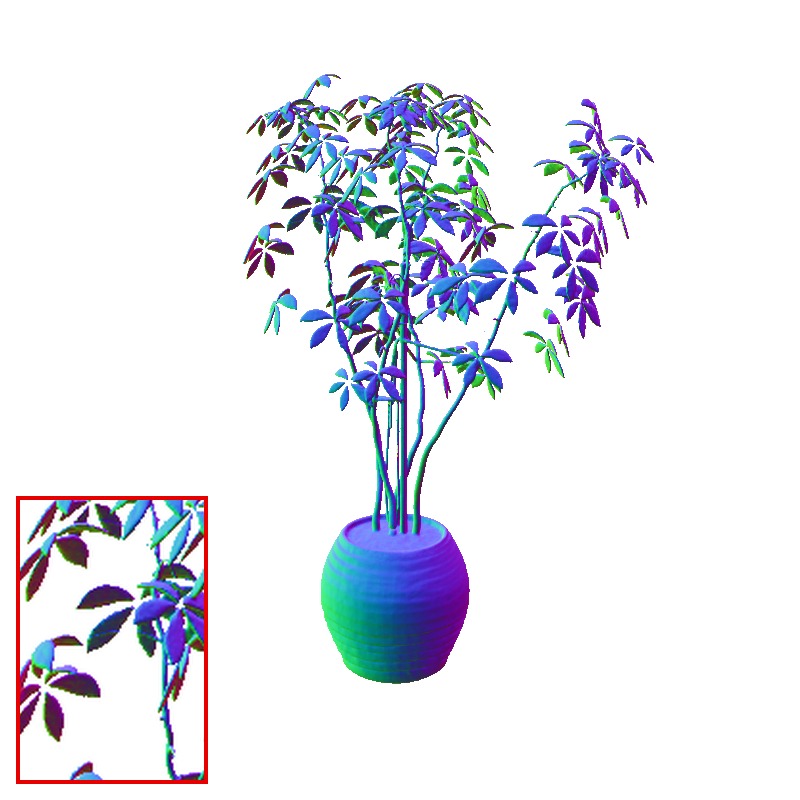
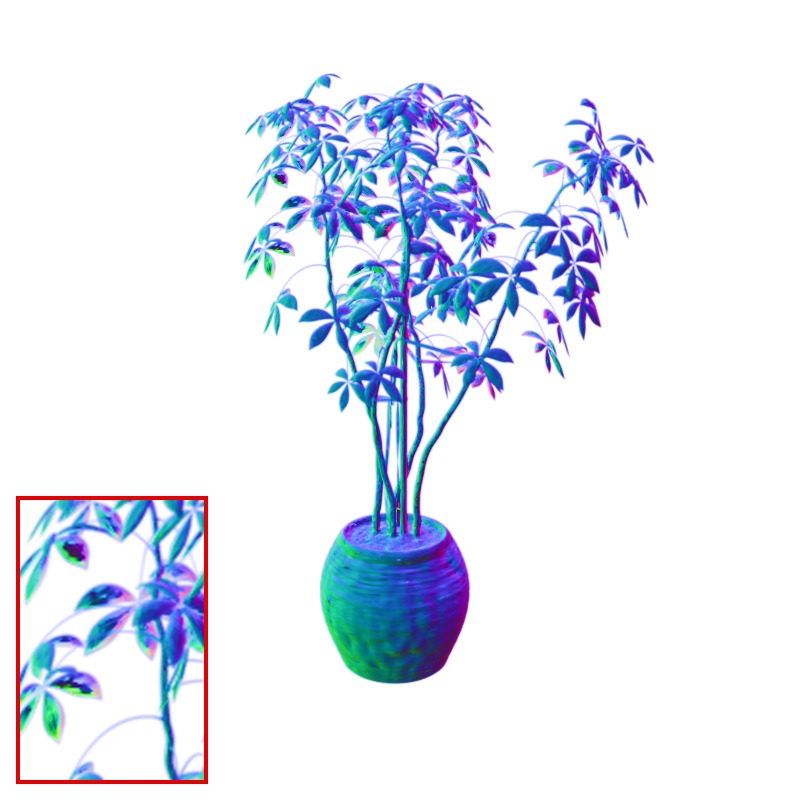
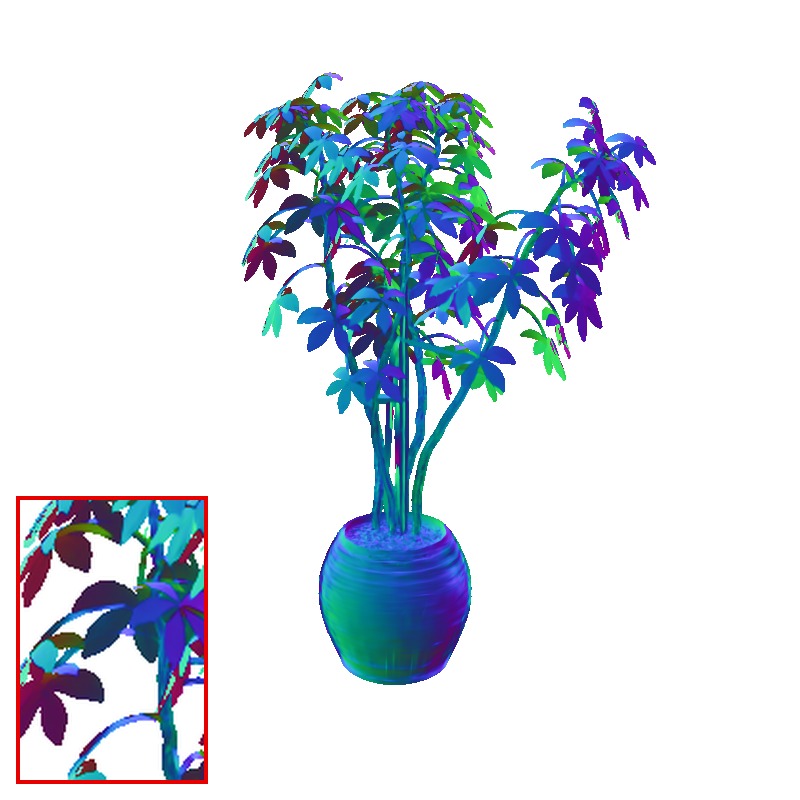
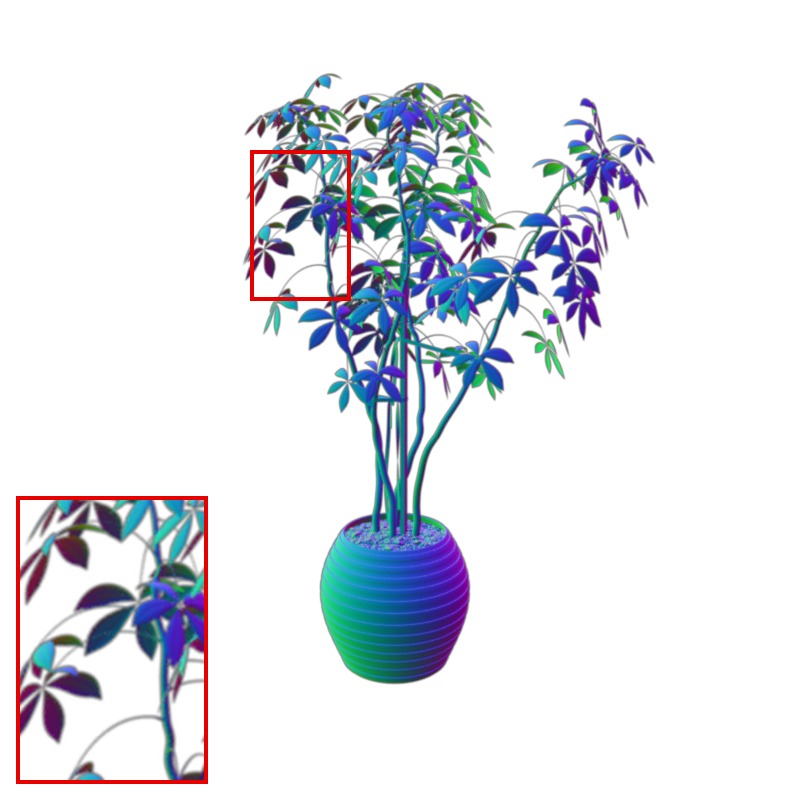
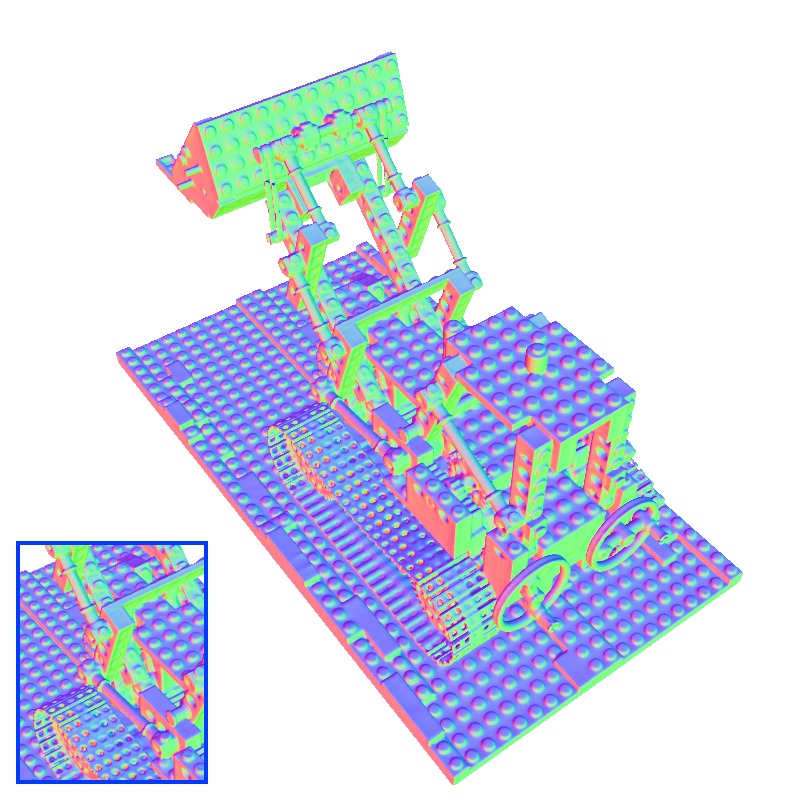
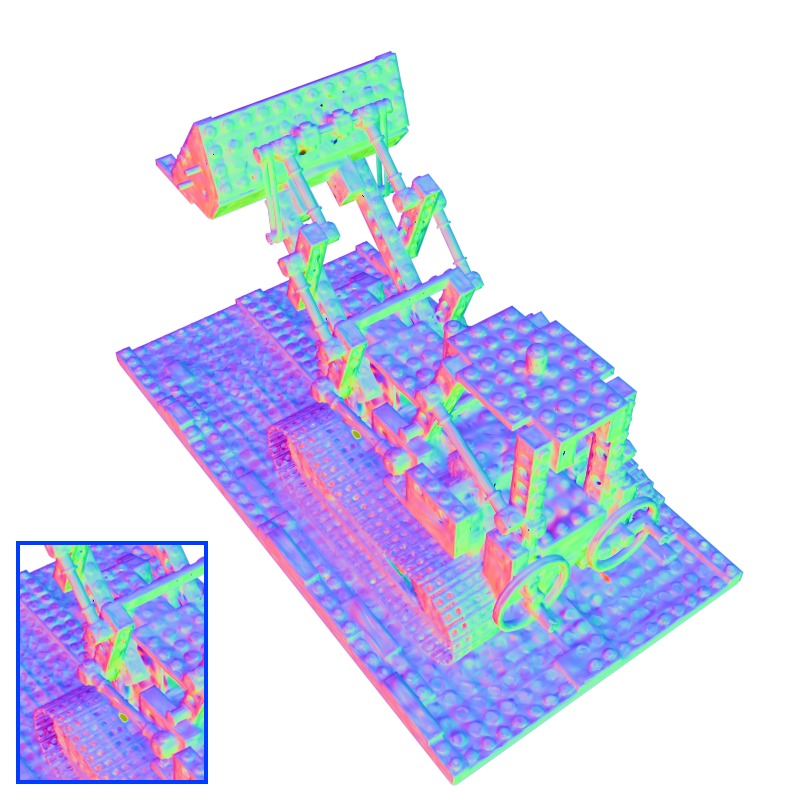
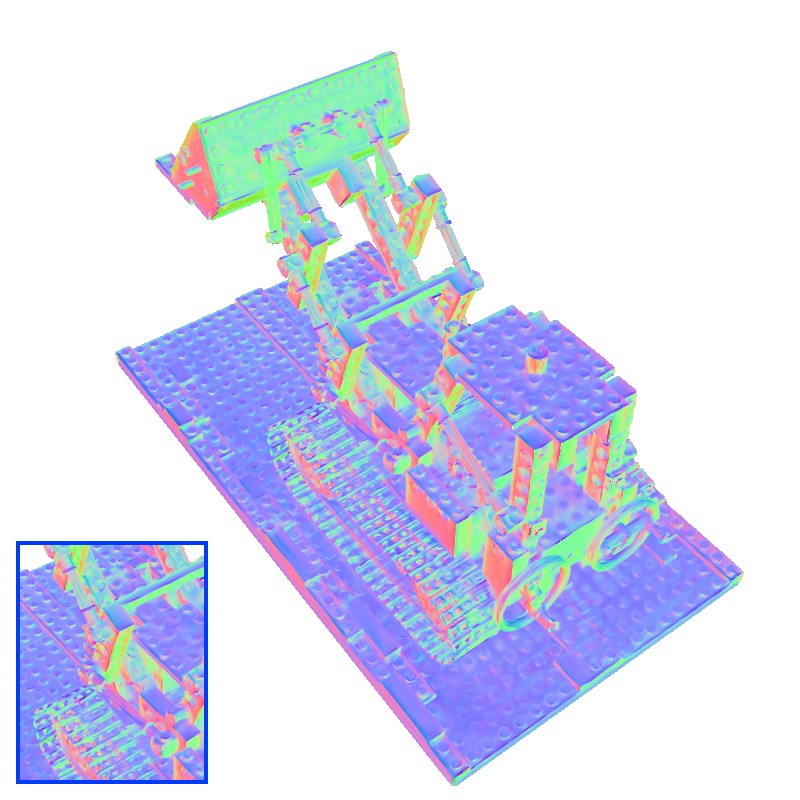
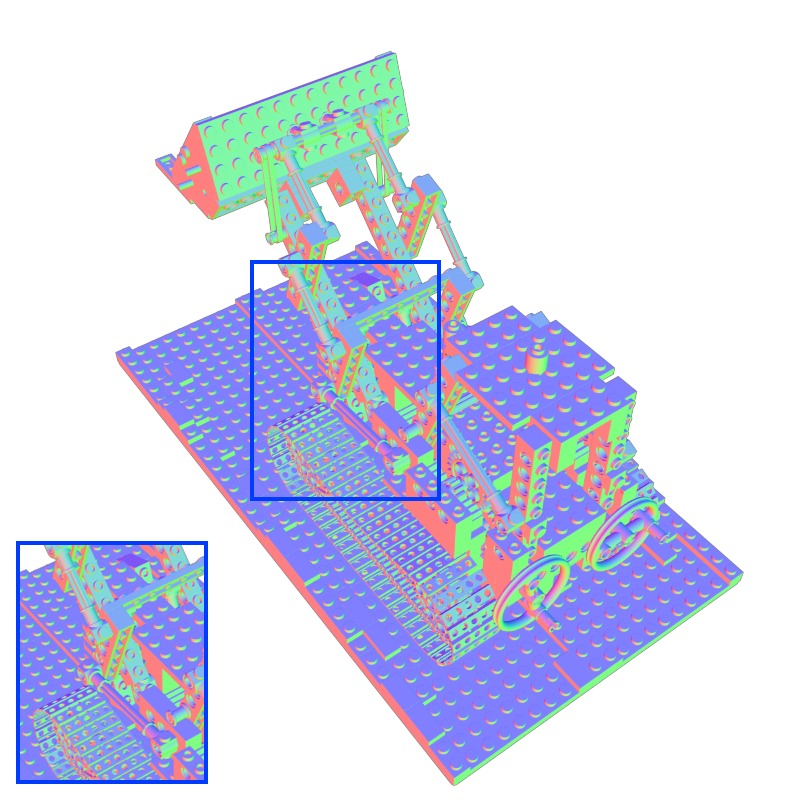
Qualitative comparison of reconstructed normals on the ficus and lego scenes. TensoIR stays closest to the ground truth and GS-IR shows visible artifacts and normal-direction errors, while ReLightGS preserves surface orientation more consistently than GS-IR, though its normals appear thicker around fine detail.
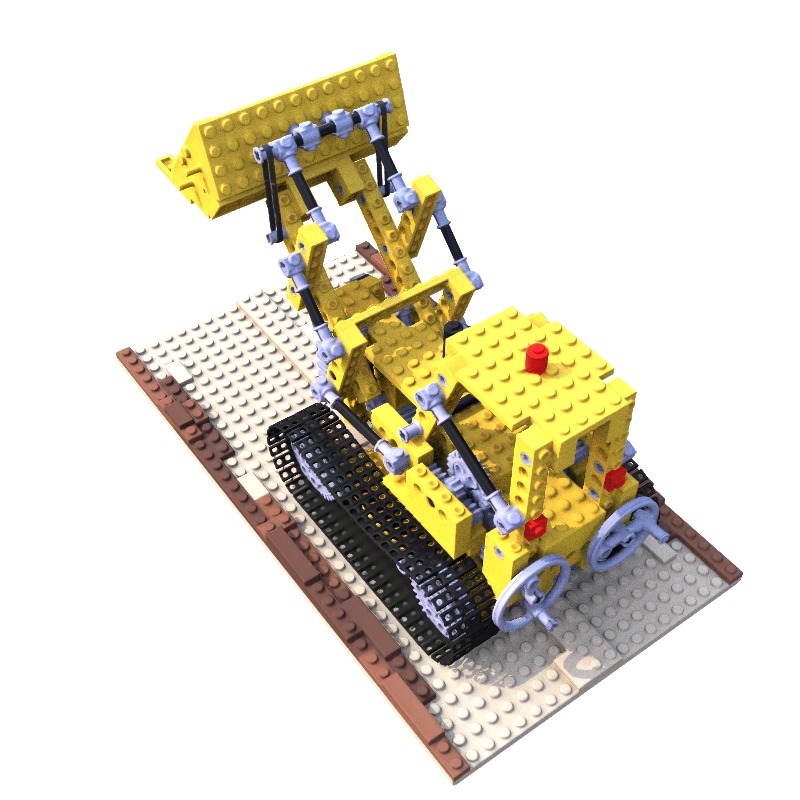
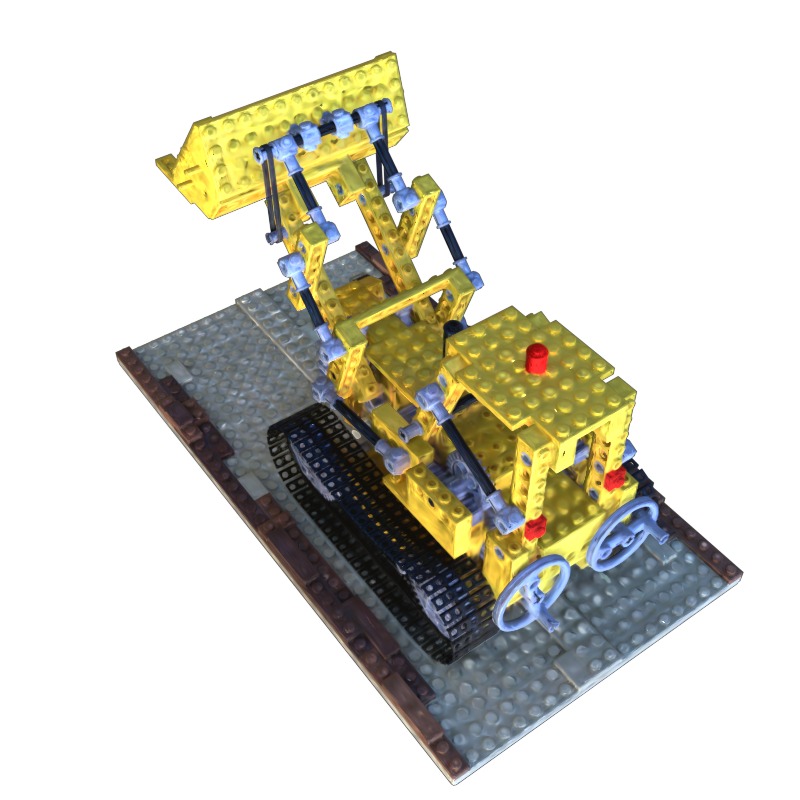
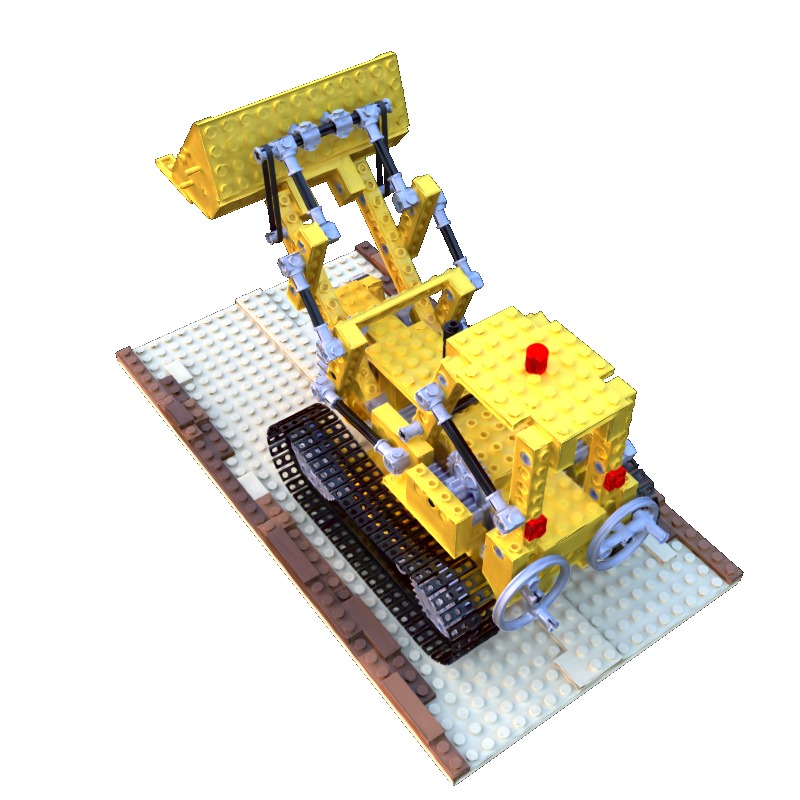
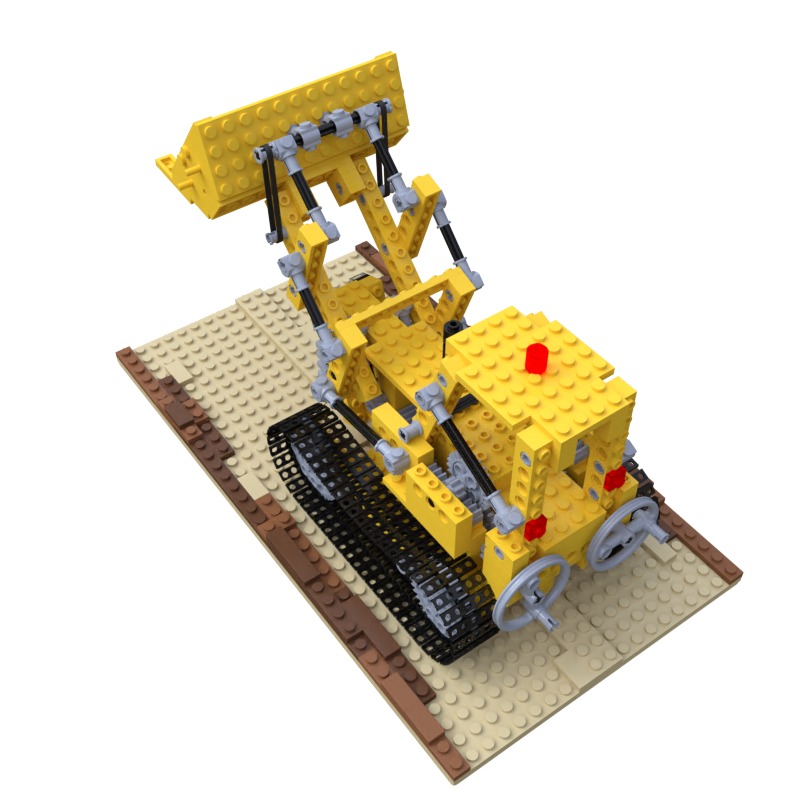
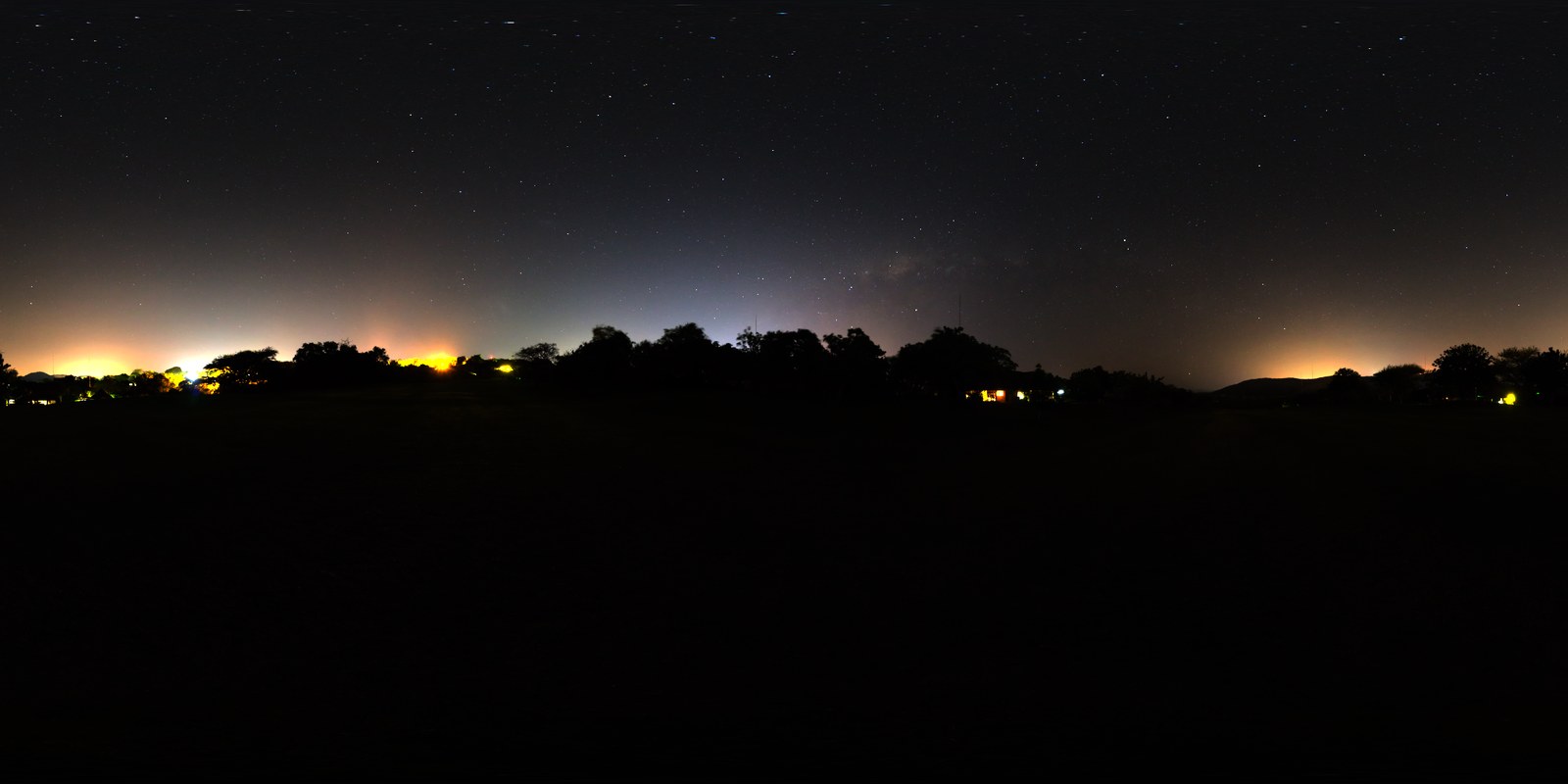
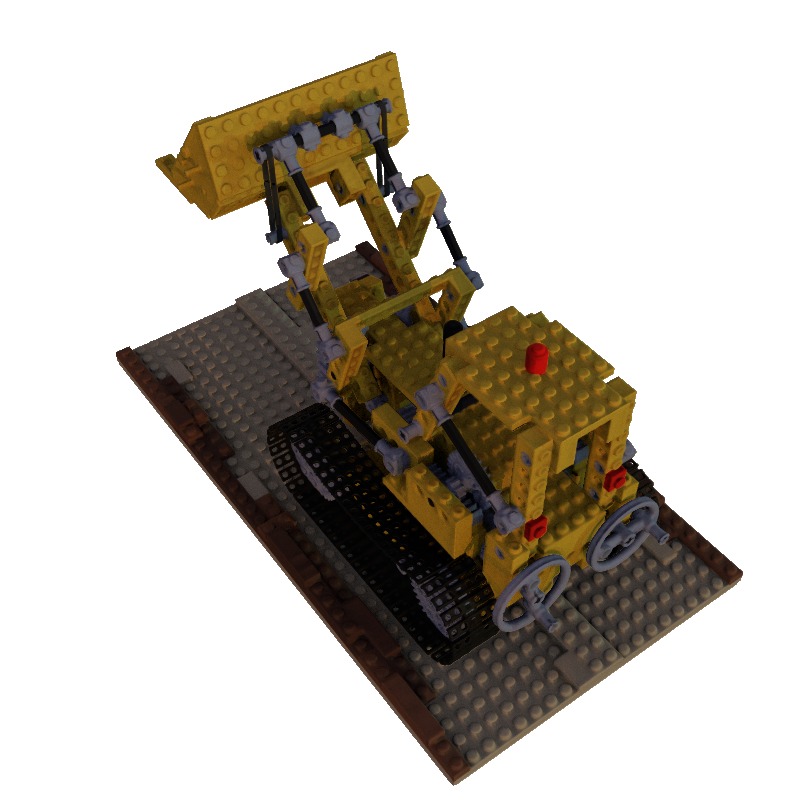
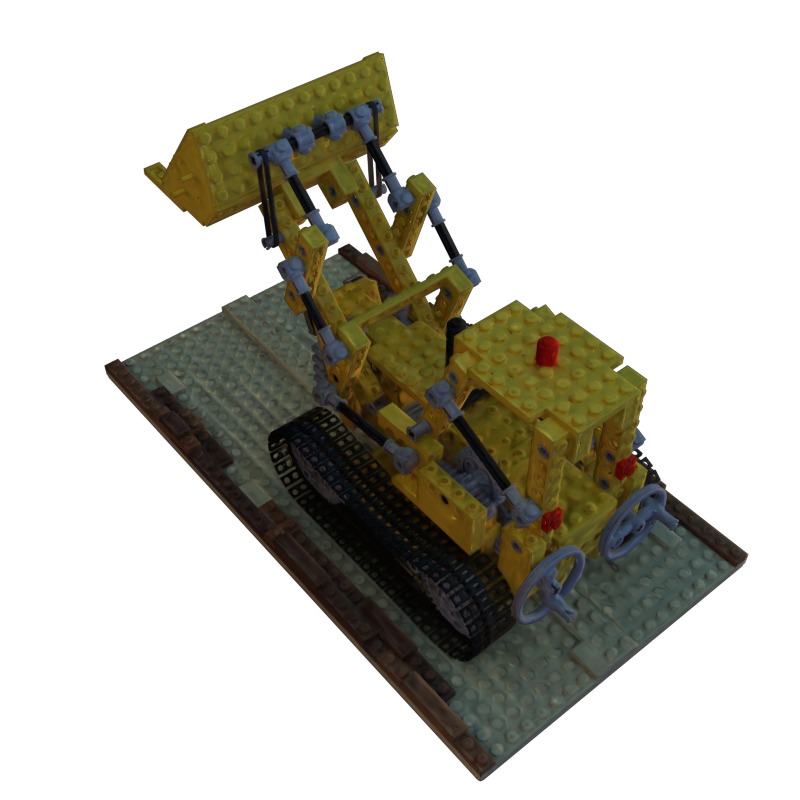
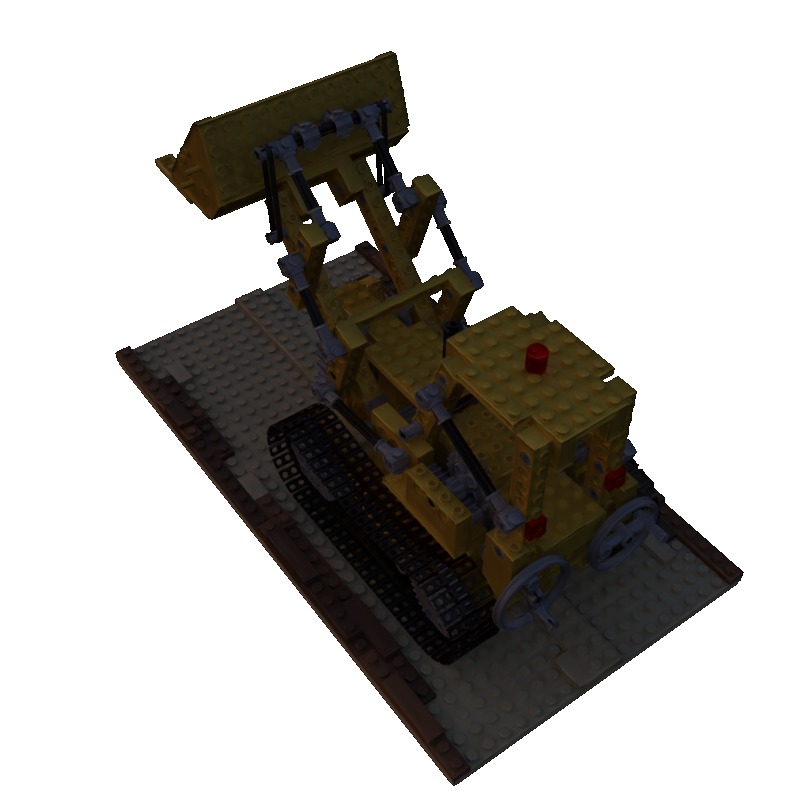
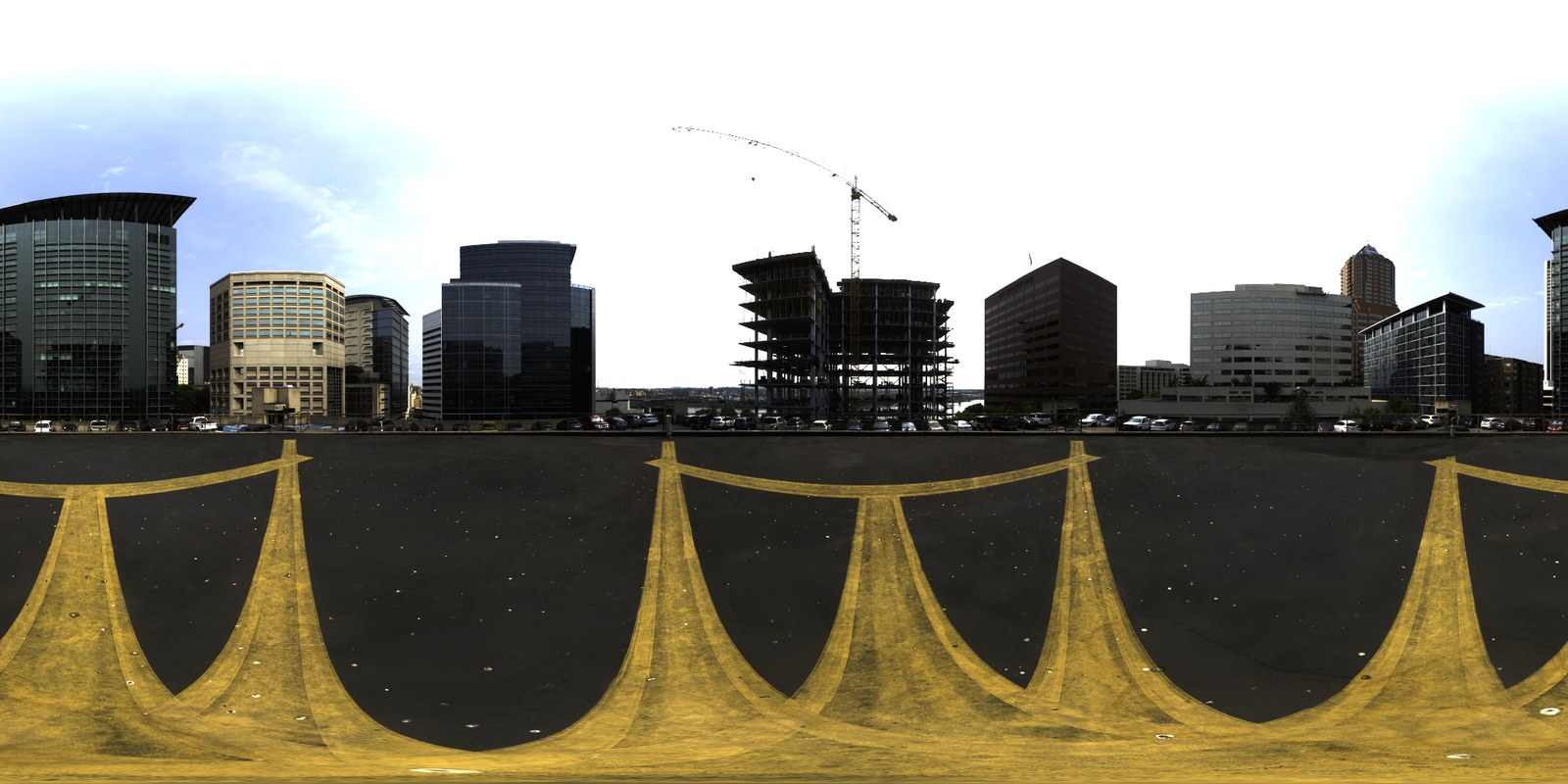
We relight the fixed Gaussian scenes under HDR environment maps. ReLightGS produces reasonable relighting directly from the fixed representation, though illumination baked into the original Gaussian colours still influences the final appearance. The overview below shows all four scenes under a city environment; the per-method comparison further down focuses on the lego scene against inverse-rendering baselines and the ground truth.
.ply models.
We evaluate on the four object-centric TensoIR Synthetic scenes (armadillo, ficus, hotdog, lego), with relighting metrics averaged over five HDR environment maps (bridge, city, fireplace, forest, night). The scenes are vanilla 3DGS models trained for 30,000 iterations, and baseline numbers are adapted from the GS-IR evaluation. For this environment-map benchmark the map intensity is set to 5.0, and screen-space ambient occlusion and shadow mapping are disabled, since it uses only environment lighting. Despite operating post-hoc on a fixed vanilla 3DGS representation, with no access to the original images and no retraining, ReLightGS improves over the Gaussian-based GS-IR baseline on every metric.
| Method | Normal MAE↓ |
Relight | |||
|---|---|---|---|---|---|
| PSNR↑ | SSIM↑ | LPIPS↓ | |||
| Neural field based rendering |
NeRFactor | 6.314 | 23.383 | 0.908 | 0.131 |
| InvRender | 5.074 | 23.973 | 0.901 | 0.101 | |
| NVDiffrec | 6.078 | 19.880 | 0.879 | 0.104 | |
| TensoIR | 4.100 | 28.580 | 0.944 | 0.081 | |
| Gaussian splat based rendering |
GS-IR | 4.948 | 24.374 | 0.885 | 0.096 |
| Ours | 4.780 | 25.920 | 0.906 | 0.095 | |
Assigning approximate PBR parameters from lifted material labels (vs. a single default material) improves environment-map relighting while leaving geometry untouched (Normal MAE is unchanged, since labels do not affect normal estimation).
| Variant | Normal MAE↓ |
Relight | ||
|---|---|---|---|---|
| PSNR↑ | SSIM↑ | LPIPS↓ | ||
| w/o material labels | 4.78 | 24.58 | 0.8836 | 0.1106 |
| w/ material labels | 4.78 | 25.92 | 0.9060 | 0.0950 |
| Improvement | – | +1.34 | +0.0224 | −0.0156 |
We also test the effect qualitatively on the real bicycle scene from Mip-NeRF 360. Even when the non-labeled variant is given a stronger default material, the labeled variant produces more material-dependent variation, for example a more appropriate response on the bicycle tires.


Although our method can produce plausible relighting from fixed Gaussian scenes, several limitations remain. First, the reconstructed normals can become overly smooth. The armadillo normal map preserves the overall surface orientation, but fine geometric details are partly smoothed out compared with the ground truth and inverse-rendering baselines. Second, the original Gaussian colours can still contain baked illumination, since we use the spherical-harmonics appearance as albedo. In the ficus example, a yellowish tint remains in parts of the plant even though the target ground truth has a different lighting balance. Finally, material-label assignment is approximate, so some Gaussians may receive incorrect material classes, introducing variations that may not match the true scene.
.ply Gaussian
model and used for plausible, interactive relighting.
[Kerbl 2023] Kerbl, B., Kopanas, G., Leimkühler, T. and Drettakis, G., 2023. 3D Gaussian Splatting for Real-Time Radiance Field Rendering. ACM Transactions on Graphics (TOG), 42(4).
[Liang 2024] Liang, Z., Zhang, Q., Feng, Y., Shan, Y. and Jia, K., 2024. GS-IR: 3D Gaussian Splatting for Inverse Rendering. CVPR, pp.21644-21653.
[Jin 2023] Jin, H., Liu, I., Xu, P., Zhang, X., Han, S., Bi, S., Zhou, X., Xu, Z. and Su, H., 2023. TensoIR: Tensorial Inverse Rendering. CVPR, pp.165-174.
[Zhang 2021] Zhang, X., Srinivasan, P.P., Deng, B., Debevec, P., Freeman, W.T. and Barron, J.T., 2021. NeRFactor: Neural Factorization of Shape and Reflectance under an Unknown Illumination. ACM Transactions on Graphics (TOG), 40(6).
[Zhang 2022] Zhang, Y., Sun, J., He, X., Fu, H., Jia, R. and Zhou, X., 2022. Modeling Indirect Illumination for Inverse Rendering (InvRender). CVPR, pp.18643-18652.
[Munkberg 2022] Munkberg, J., Hasselgren, J., Shen, T., Gao, J., Chen, W., Evans, A., Müller, T. and Fidler, S., 2022. Extracting Triangular 3D Models, Materials, and Lighting From Images (NVDiffrec). CVPR, pp.8280-8290.
[Zhang 2026] Zhang, B., Fang, C., Shrestha, R., Liang, Y., Long, X. and Tan, P., 2026. RaDe-GS: Rasterizing Depth in Gaussian Splatting. ACM Transactions on Graphics (TOG), 45(2).
[Kheradmand 2025] Kheradmand, S., Vicini, D., Kopanas, G., Lagun, D., Yi, K.M., Matthews, M. and Tagliasacchi, A., 2025. StochasticSplats: Stochastic Rasterization for Sorting-Free 3D Gaussian Splatting. ICCV, pp.26326-26335.
[Upchurch 2022] Upchurch, P. and Niu, R., 2022. A Dense Material Segmentation Dataset for Indoor and Outdoor Scene Parsing. ECCV, pp.450-466.
[Mittring 2007] Mittring, M., 2007. Finding Next Gen: CryEngine 2. ACM SIGGRAPH 2007 Courses, pp.97-121.
[Gao 2024] Gao, S., 2024. 3DGS.cpp: High Performance 3D Gaussian Splatting with Vulkan.
[NVIDIA] NVIDIA. vk_gaussian_splatting: Lighting, Shading and Shadows.